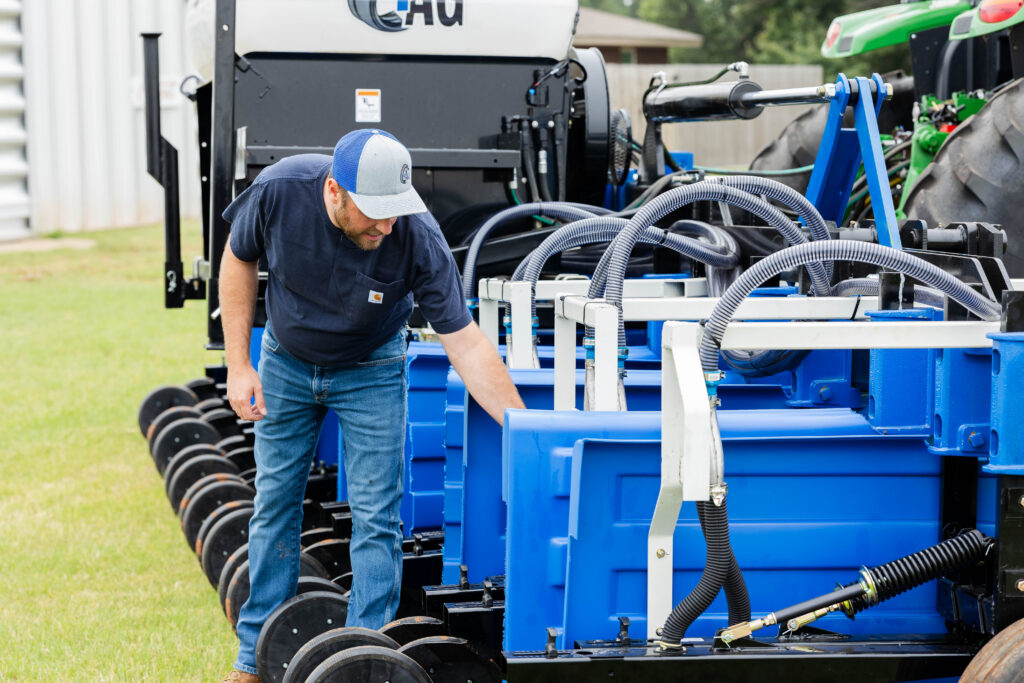
An interseeder gives no-till farmers a way to plant cover crops into a standing cash crop without tearing up the soil. If you’re serious about improving soil health and cutting extra passes across the field, the right interseeder can make that possible.
At 4AG Manufacturing, we build durable no-till equipment designed by farmers, for farmers. Our interseeder is made to handle real-world conditions — not ideal conditions.
If you’re looking for a smarter way to seed covers, protect your soil, and stay efficient, here’s what you need to know.
What Is an Interseeder?
An interseeder is a type of seeder machine that plants cover crops between the rows of an actively growing crop — most commonly corn, cotton, or milo.
Instead of waiting until harvest, you establish your cover crop early. That matters more than most people realize.
Early establishment gives cover crops time to:
- Develop stronger root systems
- Compete with weeds
- Protect soil before erosion starts
- Improve microbial activity
- Capture nutrients that might otherwise leach away
In simple terms, an interseeder helps you get more from the same acre without disturbing your no-till system.
Why Interseeding Matters in Modern No-Till Farming
No-till farming is built on one core principle: disturb the soil as little as possible.
Every unnecessary pass costs you:
Fuel
Time
Moisture
Soil structure
An interseeder fits into that philosophy naturally. It allows you to add another layer of soil protection without breaking your system.
Cover crops have become a cornerstone of long-term soil health strategies. But timing is everything. Waiting until after harvest can shorten the growing window and limit root development.
Interseeding solves that problem.
How Does an Interseeder Work in No-Till Systems?
In a no-till system, residue stays on the surface. Soil structure is preserved. Biology does the work.
An interseeder is designed to move through standing crops and place seed between rows with precision. It avoids root zones while ensuring consistent placement and seed-to-soil contact.
When paired correctly with your existing no-till equipment, it becomes part of a long-term soil strategy — not just another piece of iron in the shed.
The goal isn’t just planting seeds. The goal is integrating cover crops into your operation without adding chaos.
Why Use an Interseeder Instead of a No Till Seed Drill?
This is one of the most common questions farmers ask.
Interseeder vs. No Till Seed Drill
A no till seed drill typically seeds after harvest. That works — and it has its place.
But an interseeder changes the timing.
With an interseeder, you can:
- Seed earlier in the season
- Establish covers under canopy
- Extend your growing window
- Reduce fall workload
- Avoid weather delays after harvest
If you’re trying to maximize soil protection year-round, the interseeder offers timing advantages a no till seed drill can’t always match.
That doesn’t mean drills are obsolete. It means each tool has a purpose. The key is understanding your goals.
What Crops Work Best for Interseeding?
Interseeding works well in:
Corn
Cotton
Milo
Soybeans
Sunflowers
The most common system involves planting cover crops into corn at the right growth stage before canopy closure.
Cotton producers have also seen success integrating covers into their system through interseeding.
Farmers across the U.S., Canada, Australia, and South Africa are already using interseeding strategies successfully. The key is understanding timing and selecting the right cover crop species.
For research-backed cover crop recommendations, the USDA Natural Resources Conservation Service provides regional guides here:
https://www.nrcs.usda.gov
That’s a solid starting point if you’re building a long-term soil plan.
Choosing the Right Cover Crops for Interseeding
Less downtime. More done.
Built by farmers, for farmers.
- Annual ryegrass
- Crimson clover
- Radishes
- Turnips
- Cereal rye
- Hairy vetch
Your selection depends on:
- Crop rotation
- Moisture availability
- Soil type
- Termination plan
- Nutrient goals
Some farmers focus on nitrogen fixation. Others prioritize root depth and compaction relief.
The interseeder gives you flexibility. Your strategy determines the mix.
Benefits of Using an Interseeder
1. Improved Soil Health
Cover crops reduce erosion, build organic matter, and improve water infiltration.
Living roots feed soil biology. Biology improves aggregation. Aggregation improves structure.
Over time, this strengthens your soil profile.
2. Reduced Field Passes
Seeding earlier means fewer rushed fall operations.
That saves fuel and labor. It also reduces compaction risk from late-season traffic.
3. Better Moisture Retention
Healthy soil holds water better. Period.
Interseeded cover crops improve infiltration and reduce runoff. That moisture stays where it belongs.
4. Weed Suppression
A thick stand of cover crops helps suppress weeds naturally. That can reduce reliance on herbicides over time.
5. Nutrient Capture
Cover crops capture leftover nutrients that might otherwise leach away. That keeps fertility in your field instead of in your waterways.
6. Stronger No-Till Systems
Interseeding supports long-term soil biology — the backbone of no-till farming.
The longer you protect soil, the more resilient it becomes.
What Makes the 4AG Interseeder Different?
We don’t build equipment for showroom floors. We build it for fields.
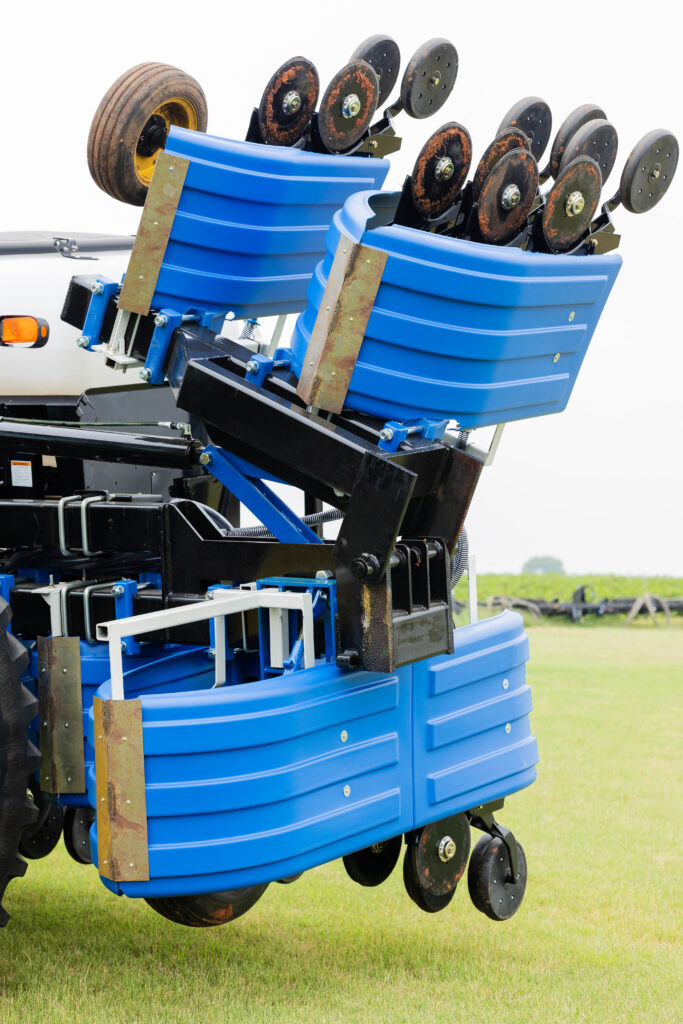
The 4AG Interseeder is:
- Built to order in 4–5 weeks
- Hydraulic drive system
- Available in 40 or 60 bushel box options
- Rate control ready for John Deere or Salford systems
- Easily attaches to most tractors
It integrates into your existing setup without overcomplicating it.
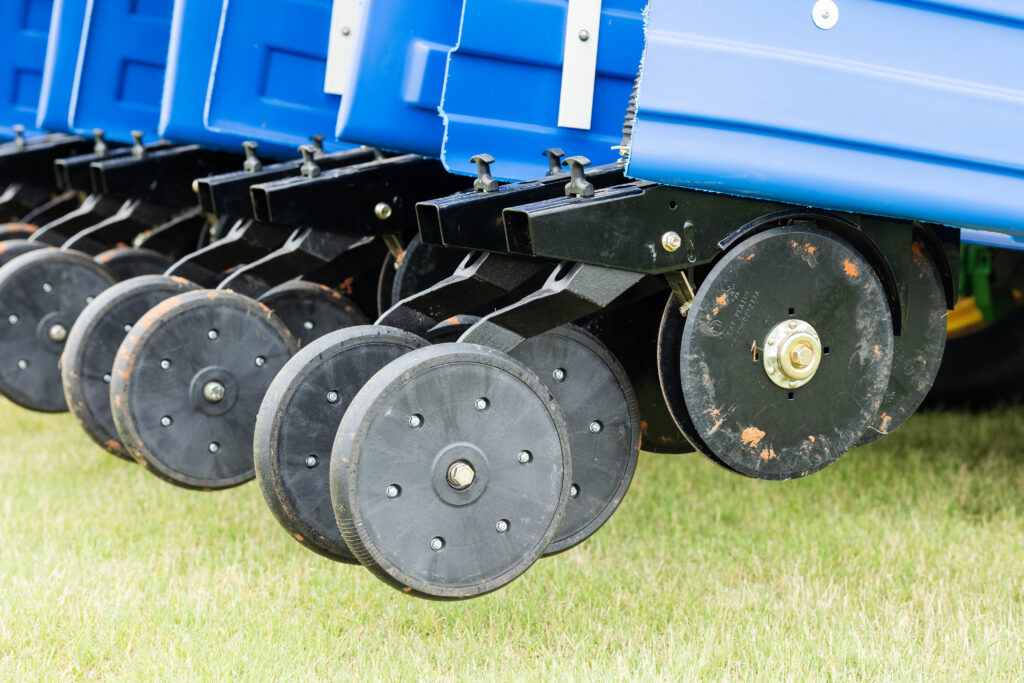
Like our planter gauge wheels and closing wheels, it’s designed with durability in mind.
We build equipment that works season after season.
Built by Farmers, Not a Boardroom
4AG Manufacturing was founded in Elk City, Oklahoma in 2011.
We farm.
We test.
We improve.
Every piece of equipment we produce is built with real-world experience behind it. We understand residue. We understand field conditions. We understand that downtime costs money.
That mindset shapes our interseeder from the ground up.
How to Start Interseeding on Your Farm
Starting doesn’t require reinventing your operation. It requires planning.
Step 1: Choose the Right Timing
Most interseeding happens when crops are established but before the canopy closes. Timing affects light penetration and early growth.
Step 2: Select Cover Crops Carefully
Match species to your soil type, crop rotation, and termination plan.
Step 3: Set Proper Seeding Rates
Calibration matters. The interseeder must deliver consistent rates across rows.
Our system is rate-control ready for precision.
Step 4: Monitor Field Conditions
Moisture, temperature, and residue levels all influence success.
No equipment replaces paying attention to your dirt.
Common Concerns About Interseeding
Will It Compete with My Cash Crop?
If timed properly, competition is minimal. Cover crops stay suppressed under canopy until harvest opens light back up.
Is It Too Complicated?
Like any seeder machine, there’s a learning curve. But once dialed in, interseeding becomes part of your normal workflow.
Does It Add Cost?
Yes — like any piece of equipment. But the long-term return comes in soil improvement, reduced erosion, and improved system efficiency.
Is an Interseeder Worth the Investment?
If your goal is long-term soil improvement and system efficiency, yes.
Interseeding supports:
- Sustainable production
- Reduced erosion
- Stronger yields over time
- Lower long-term input costs
- Improved field trafficability
It’s not about adding equipment.
It’s about strengthening your system.
Healthy soil pays dividends for decades.
How Interseeding Fits into 4AG’s No-Till Equipment Lineup
The interseeder pairs naturally with:
Together, these tools support consistent seed placement and healthier emergence in no-till systems.
When your gauge wheels maintain proper depth and your closing wheels ensure strong seed-to-soil contact, you create uniform emergence.
Add an interseeder into that system, and you extend soil protection beyond planting.
What Is the Best Interseeder for No-Till?
The best interseeder is one that:
- Handles residue well
- Maintains consistent seed depth
- Integrates with your tractor and rate control system
- Is built durable enough for multiple seasons
- Fits into your workflow without overcomplication
Flashy paint doesn’t grow crops.
Durable design does.
We don’t build flashy. We build dependability.
The Long-Term View: Building Soil for the Next Generation
Interseeding isn’t a short-term fix.
It’s a long-term strategy.
Soil that is protected year-round performs better in:
- Drought
- Heavy Rain
- Wind Events
- Temperature swings
If you’re thinking about your operation five, ten, or twenty years down the road, building soil resilience matters.
An interseeder helps you do that without abandoning no-till principles.
Ready to Strengthen Your No-Till System?
If you’re ready to add an interseeder to your operation, we’d be glad to help you find the right fit.
Visit our Interseeder product page.
Interested in becoming a 4AG dealer? Reach out through our contact page.
Less downtime. More done.
Built by farmers, for farmers.