
No Till Planting: 4 Reasons It Fails
No till planting sounds simple on paper—skip the tillage, save time, and protect your soil. But once you get into the field, it doesn’t always go that smoothly. A lot of farmers try no till planting expecting quick improvements, only to run into uneven stands, poor emergence, or yields that don’t meet expectations.
The truth is, no till planting works—but only when the system is set up correctly.
If something is off, it shows up fast. There’s no second pass to fix mistakes, and there’s not much room for error once the seed is in the ground.
This guide breaks down the four most common reasons no till planting fails and what you can do differently to get better, more consistent results.
Why No Till Planting Matters More Than Ever
No till planting isn’t just about reducing passes across the field. It’s about building a system that improves your soil over time while making your operation more efficient.
When done right, no till farming helps:
- Reduce soil erosion from wind and water
- Improve moisture retention in dry conditions
- Increase organic matter over time
- Cut fuel and labor costs
- Reduce wear on equipment
According to the USDA Natural Resources Conservation Service, conservation practices like no till play a major role in long-term soil health and sustainability.
https://www.nrcs.usda.gov
But here’s the part that often gets overlooked: no till planting requires more management, not less.
You’re replacing tillage with precision. Every pass matters. Every setting matters. And every decision shows up in your crop.
Over time, farmers who stick with no till often see stronger soil structure, better water infiltration, and more consistent performance in tough weather conditions. But those results don’t happen overnight—they’re built season by season.
What Are the Most Common Reasons No Till Planting Fails?
Most no till planting problems can be traced back to four areas:
- Seed selection
- Equipment setup
- Technical understanding
- Crop rotation
If one of these is off, it creates a ripple effect across the entire field. Fixing even one of these areas can make a noticeable difference in stand quality and overall yield.
1. Using the Wrong Seed for No Till Conditions
No till planting creates a very different seedbed compared to conventional tillage.
Instead of clean, loose soil, you’re planting into:
- Cooler ground
- Higher moisture levels
- Residue from previous crops
That environment can slow down germination and make emergence less predictable if the seed isn’t suited for it.
Why This Matters
Some seed varieties are bred for tilled ground. When those same seeds are planted into no till conditions, they don’t always perform the same way.
This can lead to:
- Uneven emergence across rows
- Delayed growth early in the season
- Reduced yield potential from the start
Even small inconsistencies at planting can carry through the entire growing season and impact final yield.
What to Watch For
- Areas of the field that emerge later than others
- Thin or patchy stands
- Weak early growth
What to Do Instead
Farmers who succeed with no till planting take a more intentional approach to seed selection.
They:
- Choose hybrids known for strong emergence
- Select varieties suited for cooler soils
- Match seed to field conditions—not just yield potential
They also pay attention to soil temperature, not just the calendar. Planting into cold ground is one of the fastest ways to slow everything down.
The bottom line is simple: if the seed isn’t right for the conditions, the rest of the system can’t make up for it.
2. Lack of Proper No Till Equipment
This is one of the biggest reasons no till planting fails.
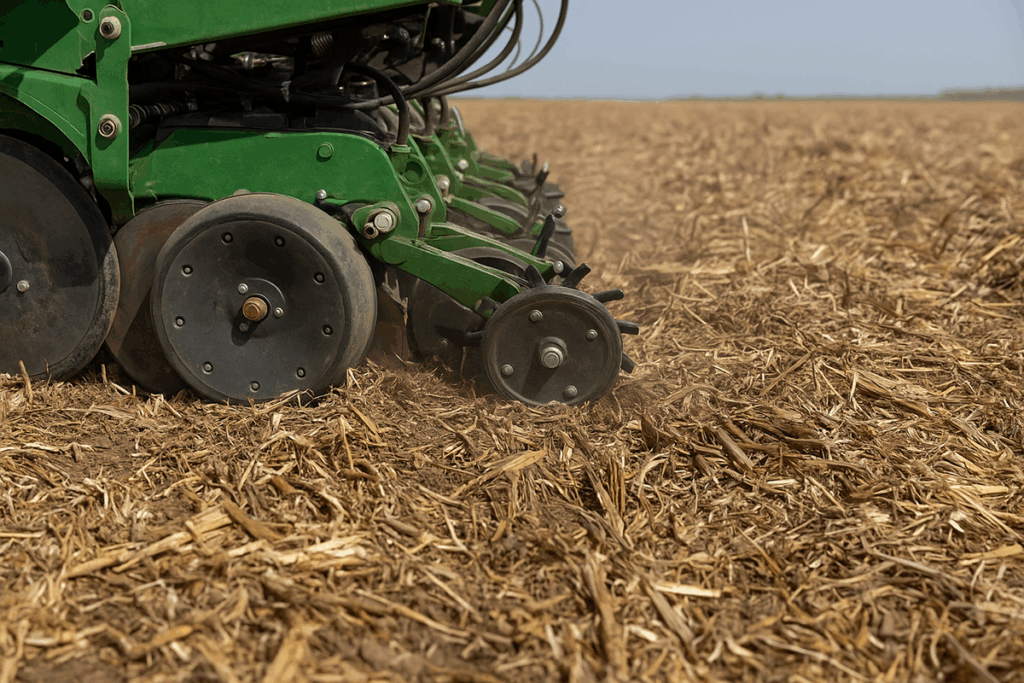
You can’t expect standard equipment to perform well in heavy residue and changing soil conditions. No till planting requires equipment that can handle variability and still deliver consistent results.
What Happens Without the Right Equipment
When equipment isn’t set up for no till, you’ll start seeing:
- Inconsistent planting depth
- Poor seed-to-soil contact
- Residue interference or hair-pinning
- Uneven emergence across the field
And once those issues show up, there’s no fixing them until the next season.
The Equipment That Matters Most
To run a successful no till system, a few components are critical:
- A properly configured no till planter
- Gauge wheels that maintain consistent depth
- Closing wheels that seal the trench correctly
- A reliable sprayer for weed control
Each of these plays a role in getting the seed placed correctly and consistently across every acre.
Why Gauge Wheels Are Critical in No Till Planting
Gauge wheels are responsible for controlling planting depth.
In no till conditions, that’s not easy. You’re dealing with:
- Hard-packed areas
- Softer soil pockets
- Heavy residue
If your gauge wheels can’t adjust and stay consistent, your planting depth will vary—and so will your emergence.
4AG’s gauge wheels are built for this kind of environment:
- Durable against rocks and sharp residue
- No lip wear over time
- Fits most planter setups
- Simple, quick installation
They’re designed by farmers who understand what happens in real field conditions.

Closing Wheels: Where Emergence Is Decided
Closing wheels handle the final step before the seed starts growing.
They’re responsible for:
- Closing the seed trench
- Firming soil around the seed
- Eliminating air pockets
If this step isn’t done correctly, even perfectly placed seed won’t emerge evenly.
4AG’s closing wheels are built to keep that process consistent:
- 24 tillers per wheel
- Strong, durable construction
- Reliable performance across varying soil types
That consistency helps improve stand uniformity across the entire field.
3. Lack of Technical Knowledge in No Till Farming
No till planting isn’t just about skipping tillage. It’s about replacing it with a different system.
You’re relying on:
- Herbicide programs instead of mechanical weed control
- Residue management instead of soil disturbance
- Precise planter setup instead of forgiving soil conditions
Without understanding how these pieces work together, problems show up quickly.
Common Mistakes in No Till Systems
- Poor residue distribution from previous crops
- Incorrect planter settings
- Inconsistent weed control timing
- Ignoring signs of soil compaction
These issues may seem small at first, but they can have a big impact on overall performance if left unaddressed.
What Successful Farmers Do Differently
Farmers who succeed with no till planting focus on learning and adjusting.
They:
- Take time to fine-tune equipment settings
- Pay attention to field conditions
- Stay consistent with weed control programs
- Learn from each season and improve
They don’t treat no till like a shortcut. They treat it like a system that improves over time.
4. Not Rotating Crops Properly
Crop rotation becomes even more important in no till systems.
Without tillage to break up disease cycles or manage residue, those issues can build over time.
What Happens Without Rotation
Planting the same crop repeatedly can lead to:
- Increased disease pressure
- Higher pest populations
- Nutrient imbalances
- Reduced yields over time
In no till planting, these problems tend to show up faster and stick around longer.
How to Improve Crop Rotation
A strong rotation plan helps balance your system.
This might include:
- Rotating between crops like corn, soybeans, wheat, or cotton
- Using cover crops to improve soil health
- Managing residue differently based on crop type
A well-planned rotation supports both soil health and long-term productivity.
How the Right Equipment Improves No Till Planting Success
At its core, no till planting is about consistency.
Every seed needs to be placed at the right depth, in the right conditions, and closed properly—all in one pass.
That’s where equipment plays a major role.
Built by Farmers, For Farmers
4AG Manufacturing builds equipment designed for real-world conditions.
Everything is:
- Field-tested
- Built for durability
- Designed to simplify operation
The goal is simple: equipment that works when you need it to, season after season.
Key 4AG Solutions for No Till Planting
Gauge Wheels
https://4agmfg.com/planter-gauge-wheels/
Closing Wheels
https://4agmfg.com/planter-closing-wheel/
Interseeder
https://4agmfg.com/interseeder/
These tools are built to help improve consistency across every acre.
What Successful No Till Farmers Do Differently
Farmers who make no till planting work don’t overcomplicate things.
They focus on:
- Keeping their system simple
- Using reliable equipment
- Paying attention to field conditions
- Making adjustments when needed
They’re not chasing trends—they’re building systems that hold up year after year.
Common Signs Your No Till System Needs Adjustment
If something feels off, it usually is.
Watch for:
- Uneven emergence
- Inconsistent planting depth
- Residue buildup or bunching
- Increased weed pressure
- Lower-than-expected yields
These are early warning signs that something in your system needs attention before it impacts your bottom line.
Bringing It All Together
No till planting doesn’t fail because the system doesn’t work. It fails when the details are overlooked.
When you focus on the right seed, the right equipment, the right knowledge, and proper crop rotation, the system starts working for you.
And when your equipment is built for real field conditions, you remove a lot of the guesswork.
Ready to Improve Your No Till Planting Setup?
If you’re ready to get more consistent results from your no till planting system, it starts with equipment that’s built to handle it.
Dealer Locator: https://4agmfg.com/4ag-dealers/
Become a Dealer: https://4agmfg.com/4ag-dealers/
Talk to someone who knows the equipment—and knows the field.