
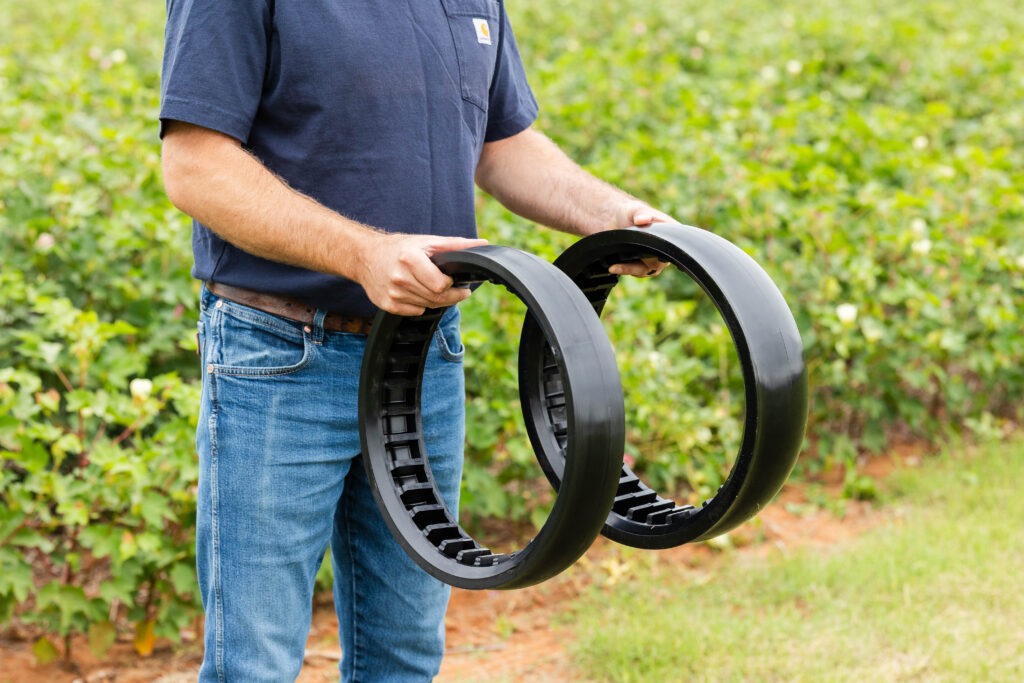
Why Planter Gauge Wheels Matter More Than You Think
Precision planting is the backbone of successful farming. Every pass across the field is an investment in seed, fuel, and time. But even the best seed won’t perform if it isn’t placed correctly. That’s where planter gauge wheels come in.
Too often overlooked, gauge wheels are critical for consistent seed depth, clean furrow formation, and residue management. If your planter gauge wheels are worn, misaligned, or mismatched to your soil, they may be sabotaging your planting success.
In this guide, we’ll explain what planter gauge wheels do, how they improve seed placement, when to replace them, and why the right gauge wheel tires and gauge wheel arm repair kits can extend the life of your planter.
What Do Planter Gauge Wheels Do?
Gauge wheels are mounted right beside the seed opener. Their job? Control depth, manage residue, and protect the furrow.
Consistent Depth: Gauge wheels ride the soil surface and set the opener blade at a uniform depth.
Residue Control: They hold down mulch and residue so it doesn’t plug the opener.
Furrow Integrity: They keep opener blades from blowing out sidewalls and damaging seed placement.
Without gauge wheels, seed depth varies row to row. That leads to uneven emergence, lost yield potential, and wasted inputs.
Why Gauge Wheel Arm Repair Kits Matter
The gauge wheel arm is one of the most common planter wear points. Because the wheel’s weight doesn’t sit perfectly centered, the pivot pin and arm wear unevenly. That causes the wheel to pull away from the opener blade, leaving gaps.
Temporary fixes like sliding the arm inward only go so far. The better long-term solution is a gauge wheel arm repair kit.
Repair kits with a disc spring mechanism apply outward pressure that keeps the arm centered. That means:
The gauge wheel stays firmly against the opener blade.
Pressure is evenly distributed, reducing wear.
The arm pivots freely without binding.
Bottom line: repair kits save money by preventing premature wear and keeping your planter running true.
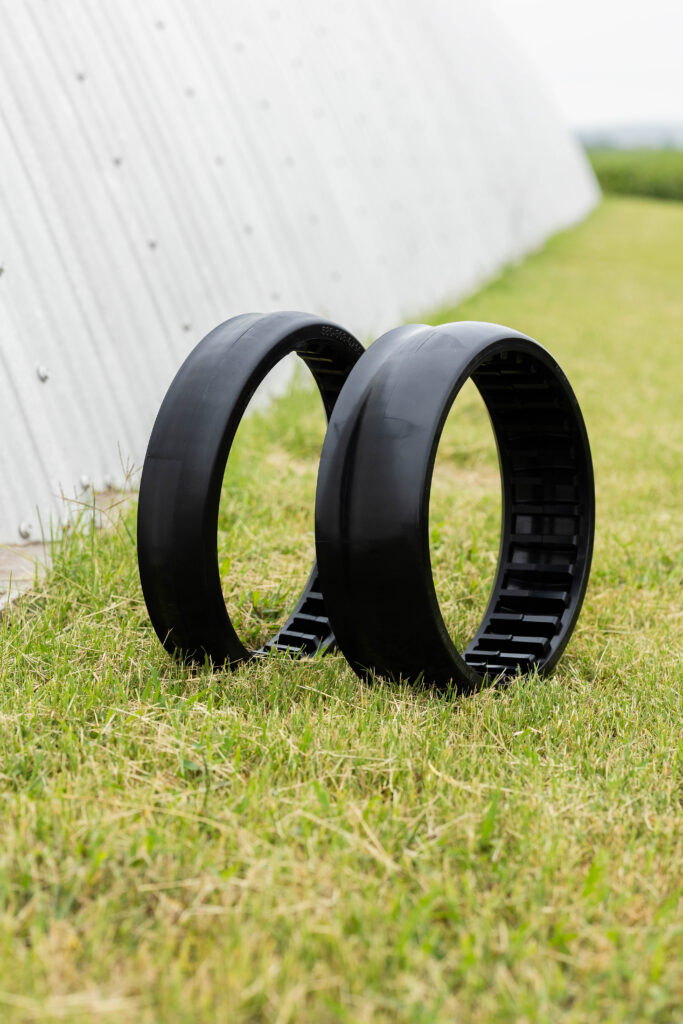
How Planter Gauge Wheels Improve Planting
Gauge wheels do more than ride along—they directly affect yield outcomes.
Soil and Residue Control: Keep furrows clean and preserve soil moisture.
Furrow Integrity: Prevent opener blades from damaging sidewalls.
Seed Placement Accuracy: Guide the seed drop at the correct depth every time.
Skipping maintenance on gauge wheels is like running a race on flat tires. You’ll finish, but not at your best.
Choosing the Right Gauge Wheels
Not all gauge wheels are built the same. The right choice depends on your fields.
Skinny Gauge Wheels
Best for: narrow rows, heavy residue, conservation tillage
Advantage: cut through residue, less soil compaction
Standard Gauge Wheels
Best for: most common planting conditions
Advantage: durable, reliable, widely compatible
Materials Matter
Gauge wheel tires come in different builds—rubber, polyurethane, or proprietary compounds. Look for tires that are:
Durable: withstand sharp residue and rough terrain
Long-Lasting: won’t break down after a few seasons
Consistent: keep accurate seed depth without frequent adjustment
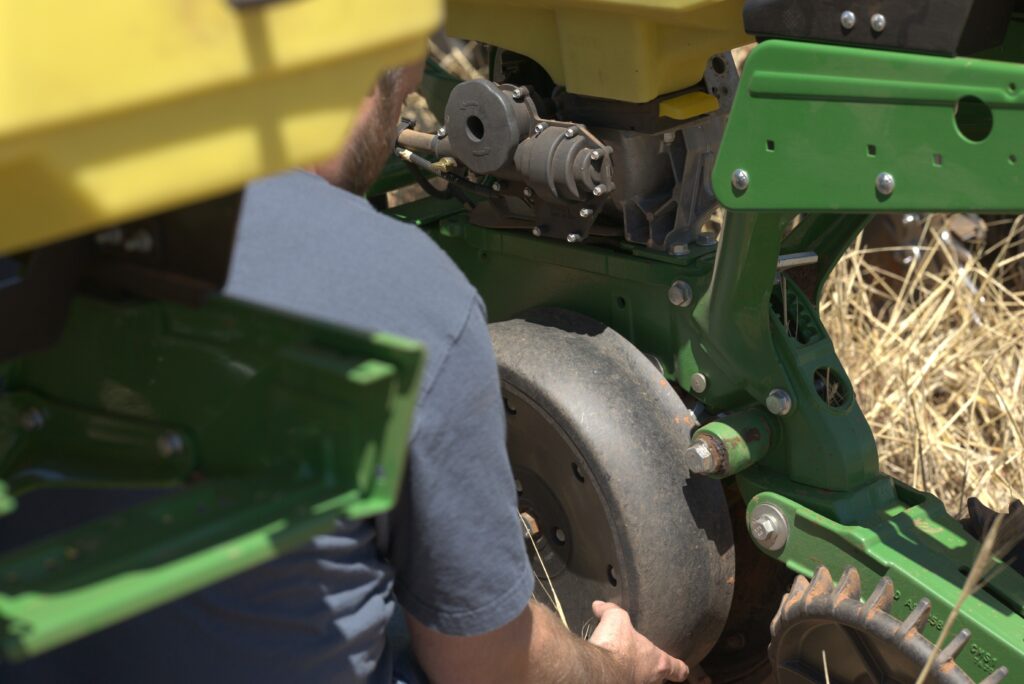
When to Replace Planter Gauge Wheels
Wondering if your wheels are still field-ready? Look for these signs:
No more adjustment space: If you can’t close the gap between the opener blade and the wheel, it’s worn.
Worn rubber edges: The inside tire face wears first—losing contact with the opener.
Row unit underperformance: Poor contact leaves dirt on the opener blade and inconsistent furrows.
If you see these signs, it’s time for replacement.
Question Farmers Ask: What’s the Best Gauge Wheel Tire?
The best gauge wheel tire depends on your soil type and planting system.
Heavy clay: Durable compounds handle tough, sticky soils.
High residue no-till: Narrow tires improve residue clearance.
Loamy soils: Standard tires offer balance and durability.
Tip: match tire design to soil, not just to planter brand.
Why Upgrading to 4AG Gauge Wheels Pays Off
At 4AG Manufacturing, our planter gauge wheels and gauge wheel tires are designed by farmers, for farmers.
Durable compounds last longer than OEM rubber.
Tight contact fit keeps openers clean and ensures precision depth.
Easy installation means less downtime, more uptime.
Engineered for no-till and conventional systems alike.
Explore our planter gauge wheels and see why farmers across the country trust 4AG for dependable depth control.
External Perspective: Why Depth Control Matters
According to Iowa State University Extension, controlling planting soil depth is critical for successful germination. Good seed depth—1.5 to 2.0 inches or even deeper under dry conditions—helps ensure moisture availability and improves seed-to-soil contact. Proper depth wheels or gauge wheels holding accurate depth control are key to maintaining consistent emergence across varied soil textures.
Conclusion
Are your planter gauge wheels sabotaging your planting? If they’re worn, misaligned, or neglected, the answer might be yes. But with the right tires, repair kits, and maintenance, they can keep your planter running smooth and your stands uniform.
Call to Action:
Upgrade your setup today. Visit our Dealer Locator or Contact page to learn how to get 4AG planter gauge wheels on your farm.