
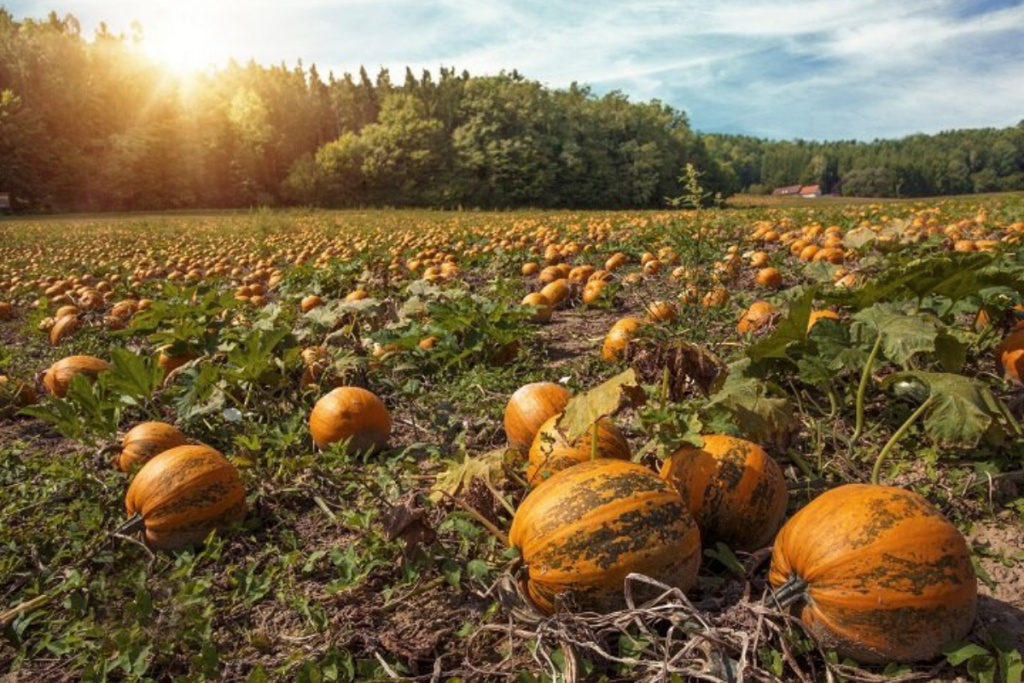
Pumpkins may be closely associated with fall, but producing that fall crop begins months before anyone starts thinking about jack-o’-lanterns, pumpkin pie, or trips to the pumpkin patch. Successful pumpkin farming requires planning around variety selection, soil conditions, planting dates, moisture, fertility, pollination, and harvest timing.
Pumpkins are a warm-season crop, and Oklahoma provides conditions that can support commercial and smaller-scale pumpkin production. According to Oklahoma State University Extension, pumpkins and squash can be grown throughout the state, although weather, disease pressure, and summer heat can affect production.
For growers, getting the crop established correctly is an important first step. Good pumpkin planting practices help create a more consistent stand and give young plants the opportunity to develop the root systems and vines necessary to support fruit later in the season.
Whether you’re adding pumpkins to an existing operation or preparing for another season of production, understanding the crop from planting through harvest can help you make better decisions in the field.
Start Pumpkin Farming With the Right Variety
There is no single best pumpkin variety for every operation. Pumpkins vary significantly in size, color, shape, maturity, disease resistance, and intended use.
A grower producing pumpkins for a fall agritourism operation may prioritize traditional orange jack-o’-lantern varieties, while another may want smaller decorative pumpkins, pie varieties, specialty colors, or a combination of several types.
Before purchasing seed, consider your market and the length of your growing season. Days to maturity are especially important when the goal is to have marketable pumpkins available during a specific fall window.
Oklahoma State University’s production recommendations include field, pie, and smaller pumpkin varieties, demonstrating how much the intended market can influence variety selection. Disease resistance can also be an important consideration, particularly because powdery mildew and virus diseases are common pumpkin production concerns in Oklahoma.
Your seed selection determines much of what comes afterward, so pumpkin farming should begin with a clear understanding of what you want to harvest and when you need it ready.
Choose the Right Field for Pumpkin Planting
Pumpkins need room. Their vines can spread considerably, making field selection and row spacing important considerations before pumpkin planting begins.
Soil conditions matter as well. Oklahoma State University notes that squash and pumpkins can grow in several soil types, although loams and sandy loams are preferred. Good drainage is particularly important because poorly drained conditions can increase problems with root, crown, and fruit rots.
Pumpkins also perform best in warm conditions. Rather than simply planting according to a calendar date, growers should pay attention to soil temperature.
OSU recommends waiting until the soil temperature at planting depth reaches at least 60°F, with approximately 70°F to 90°F considered optimal for germination. Planting into soil that is too cold can slow emergence and contribute to an inconsistent stand.
That makes timing one of the first major decisions of the growing season.
Time Pumpkin Planting for Your Intended Harvest
One of the biggest problems with the original version of this article was the suggestion to simply plant pumpkins in late July for an early October harvest. The actual answer depends heavily on location, variety, growing conditions, and whether you’re targeting a spring-planted crop or a fall garden.
For Oklahoma, OSU’s general garden planning guide lists pumpkins as a warm-season crop planted from approximately April 10–30 or later, with around 90–120 days to harvest. Its fall gardening recommendations also provide a July 15–30 planting window for pumpkins, with approximately 100–120 days from planting to harvest.
Commercial growers should plan more specifically around the variety’s days to maturity and their target market date.
If pumpkins need to be ready for October sales, work backward from that target using the maturity information provided for the selected variety. Then account for local weather and growing conditions rather than assuming every seed planted on a particular date will mature on exactly the same schedule.
Pumpkin farming always involves variables you cannot completely control, but thoughtful planting dates give the crop a better chance of reaching maturity during the desired harvest window.
Prepare the Soil Before Planting
Healthy pumpkin plants require more than putting seed into the ground and waiting.
Soil testing can provide valuable information about pH and nutrient levels before planting. OSU recommends a soil pH between approximately 6.0 and 6.8 for squash and pumpkin production and recommends basing phosphorus and potassium applications on soil test results.
Nitrogen management also deserves attention. Pumpkins respond to nitrogen, but excessive nitrogen can encourage vegetative growth while delaying flowering and fruit set. Fertility should therefore be based on actual soil conditions rather than assuming that more fertilizer automatically means a better crop.
Soil preparation can vary according to the operation. Conventional tillage, strip-till systems, cover crops, and reduced-tillage approaches can all play a role depending on the field and management system.
OSU notes that repeated clean tillage can contribute to the loss of soil organic matter, while cover crops can be used to help add organic material back into the system.
The right approach ultimately depends on your soil, equipment, production goals, and existing farming practices.
Use the Right Farming Equipment for Establishment
Commercial pumpkin planting is very different from putting a few seeds into a backyard garden.
Larger operations need farming equipment capable of maintaining appropriate seed placement and spacing while operating efficiently across the field. Equipment setup should match the seed, soil conditions, desired population, and production system.
OSU notes that direct seeding is the primary method of pumpkin and squash establishment. Its commercial production guidance recommends planting seed approximately ¾ to 1 inch deep, although exact spacing varies according to the size and growth characteristics of the selected variety.
Whatever planting system is being used, consistency matters. Growers should inspect their farming equipment before planting and make adjustments based on actual field conditions rather than assuming last season’s settings will automatically perform the same way.
Planter components that influence depth and seed trench closure also deserve attention. Worn or poorly performing components can make consistent planting more difficult.
At 4AG Manufacturing, we understand how much farmers depend on those seemingly small pieces of farming equipment. Our lineup of farming tools includes durable planter gauge wheels and closing wheels designed around the demands of real field conditions.
Give Pumpkin Vines Enough Space
One pumpkin seed does not remain a small plant for very long.
Vining varieties can spread across significant areas, which makes appropriate spacing important for plant development, field access, airflow, and management.
OSU’s commercial recommendations vary according to plant type. Dwarf squash types can be planted more closely, while medium and large types require wider rows and greater in-row spacing. Its Oklahoma garden guide lists approximately five feet between rows for pumpkins.
Growers should ultimately follow recommendations for their specific variety and production system rather than treating one spacing measurement as universal.
Adequate spacing also makes it easier to scout the crop as plants develop, something that becomes increasingly important as pumpkin vines begin filling the field.
Manage Water Carefully Throughout the Growing Season
Pumpkins tolerate heat and some drought, but drought tolerance does not mean water is unimportant.
OSU notes that squash and pumpkins will not reach their full yield potential when drought stressed. Supplemental irrigation may therefore be necessary when rainfall does not meet crop requirements.
Several irrigation methods can be used, including overhead sprinklers, furrow irrigation, and drip systems. Drip irrigation can be particularly efficient because water is delivered directly at or beneath the soil surface rather than wetting the entire crop canopy.
This can provide another advantage: reducing leaf wetness that may contribute to disease pressure.
If overhead irrigation is used, OSU recommends watering early enough in the day for foliage to dry before nighttime.
As with fertility, irrigation should respond to actual field conditions. The goal is adequate and consistent moisture without creating prolonged saturated conditions that encourage disease.
Don’t Forget About Pollination
Healthy vines and plenty of flowers do not automatically guarantee plenty of pumpkins.
Pumpkin plants produce separate male and female flowers, and pollen needs to move from the male flower to the female flower for fruit development. Insects—particularly bees—perform much of that work.
OSU notes that protecting and managing pollinators is critical for pumpkin fruiting and that better pollination can contribute to better seed formation and larger fruit within a variety.
That makes pollinator activity another part of crop scouting.
Growers should be particularly thoughtful when making pesticide applications during flowering. Product labels must always be followed, and application timing should account for pollinator activity whenever possible.
A pumpkin field may be planted perfectly, fertilized appropriately, and adequately irrigated, but successful pollination is still necessary to turn those flowers into a marketable crop.
Scout Pumpkin Fields Throughout the Season
One of the easiest mistakes in pumpkin farming is waiting until a problem becomes obvious from the road.
Regular scouting allows growers to identify weeds, insect activity, disease symptoms, irrigation problems, and crop development earlier.
OSU recommends scouting fields at least weekly after planting and recording crop development as well as weed and insect occurrence.
Pumpkins in Oklahoma can face several disease challenges, including powdery mildew, virus diseases, angular leaf spot, downy mildew, root diseases, and various fruit rots. Crop rotation, resistant varieties, good drainage, sanitation, and thoughtful irrigation can all contribute to disease management.
Growers should watch for:
- Changes in leaf color, spotting, wilting, or mildew
- Insect populations or feeding damage
- Standing water or excessively dry areas
- Poor fruit development or pollination
- Weed competition and uneven plant growth
Finding a problem early gives you more options than discovering it after it has spread throughout the field.
Know When Pumpkins Are Ready to Harvest
After months of pumpkin planting, irrigation, scouting, and crop management, the final step is knowing when the fruit is mature.
Color is useful, but it should not be the only indicator.
OSU recommends harvesting mature winter squash and pumpkins when the skin has hardened enough to resist denting from thumbnail pressure. A very light vine-killing frost may not destroy mature fruit, but pumpkins should not remain in the field through a hard freeze.
During harvest, cut the stem using a sharp knife or pruning shears and leave a portion attached to the pumpkin. Handle fruit carefully because broken stems, damaged skin, and bruising can reduce quality and storage potential.
This is especially important for pumpkins headed to a retail market, pumpkin patch, or agritourism operation where appearance contributes directly to value.
After spending an entire growing season producing the crop, careful harvesting helps protect that investment during the final trip out of the field.
Better Pumpkin Farming Starts With Better Preparation
There is no single trick that guarantees a successful pumpkin crop.
Good results come from a series of decisions: choosing an appropriate variety, understanding your soil, planting at the right time, managing fertility and moisture, supporting pollination, scouting regularly, and harvesting at maturity.
Reliable farming equipment is another part of that system.
When planting season arrives, farmers need equipment that can handle actual field conditions without creating unnecessary downtime. Components should fit correctly, perform consistently, and hold up to the work.
That’s the philosophy behind the equipment we build at 4AG.
From planter gauge wheels and closing wheels to the Inter Seeder and other practical solutions, our farming tools are designed by farmers who understand what it takes to keep an operation moving.
Because whether you’re pumpkin farming or planting another crop, the goal is ultimately the same: get the crop established, protect the work you’ve put into it, and give yourself the best opportunity for a productive harvest.