Planter Maintenance Checklist: 6 Costly Mistakes
Getting ready for planting season isn’t just about hooking up the planter and heading to the field. If your equipment isn’t dialed in before that first pass, you’re already fighting an uphill battle.
A planter that hasn’t been properly maintained can cause inconsistent seed depth, poor emergence, open seed trenches, and uneven stands. And once those seeds are in the ground, there’s no going back to fix it.
That’s why having a solid planter maintenance checklist matters.
This guide walks through six key areas to check before planting season so your planter runs like it should—and your crop gets the best possible start.
Why Planter Maintenance Matters More Than You Think
Every pass you make during planting sets the tone for the entire season. You only get one chance to place that seed correctly.
Your planter has one job: place each seed at the right depth, at the right spacing, and close the trench properly. If any part of that process is off, it shows up in your crop.
Poor planter setup can lead to:
- Uneven seed depth
- Inconsistent spacing
- Poor seed-to-soil contact
- Reduced germination rates
- Lower yield potential
These problems don’t just stay small. They compound throughout the season. A plant that starts behind rarely catches up, and that gap shows up at harvest.
Taking time to go through a planter maintenance checklist helps eliminate those issues before they start. It’s one of the highest-return things you can do before the season begins.
According to the USDA Natural Resources Conservation Service, proper equipment setup and planting practices play a major role in improving crop establishment and long-term soil productivity.
https://www.nrcs.usda.gov
When Should You Start Your Planter Maintenance Checklist?
Timing matters more than most people think.
Too many farmers wait until right before planting to start looking things over. By then, you’re working against the clock, and that’s when details get missed.
Ideally, planter maintenance should start weeks ahead of planting season.
Starting early gives you time to:
- Identify worn or damaged parts
- Order replacements without delays
- Make proper adjustments instead of quick fixes
- Test your planter before conditions matter
It also gives you a chance to slow down and be thorough. Rushing through maintenance often leads to overlooking small issues that turn into bigger problems later.
What Should Be on Your Planter Maintenance Checklist?
Before heading to the field, make sure you’ve worked through these six key areas.
Each one plays a role in making sure your planter performs consistently across every acre.
1. Inspect and Clean Meter Units
Meter units control how seeds are distributed. If they’re not working correctly, your spacing and population will be off from the start.
Take time to disassemble each meter and clean it thoroughly using a soap solution. Avoid using oil or kerosene, as they can damage internal components and affect performance.
What to Look For
- Cracks in plastic covers
- Worn or broken fingers
- Dirty or worn seed brushes
- Backplate wear
What to Do
- Replace damaged components
- Adjust fingers using a feeler gauge
- Clean all internal parts completely
Accurate metering is one of the most important parts of planting. If this step is off, nothing else on your planter can fix it.
2. Check Planter Unit Stability
Loose planter units create inconsistency across rows.
Lift each unit and check for side-to-side movement. If it moves too easily, something needs tightened.
Then step back and visually inspect the planter. All rows should sit evenly at the same height.
Common Problems
- Loose bolts
- Worn mounting points
- Uneven row alignment
Why It Matters
Even small movement affects seed placement.
When planter units aren’t stable, depth and spacing vary across rows. That leads to uneven emergence and inconsistent crop development.
Tightening and aligning units is a simple step that makes a noticeable difference.
3. Examine Seed Opener Discs
Seed opener discs are responsible for cutting through residue and forming the trench where seeds are placed.
If they’re worn, they won’t cut cleanly—and that affects both depth and placement.
How to Check Them
Place a card between the discs and bring them together.
- A V-shaped trench means they’re working properly
- A W-shaped trench means they’re worn
What to Look For
- Reduced disc diameter
- Uneven wear
- Poor contact between discs
Recommended Contact
- New discs: 1 to 1.5 inches
- Worn discs: up to 3 inches
Clean, consistent trench formation is critical. If your discs aren’t cutting properly, your planter can’t maintain depth—even if everything else is set correctly.
4. Inspect Seed Tubes and Guards
Seed tubes guide seeds from the meter into the trench.
Over time, these tubes wear down and can curl inward. When that happens, seeds may bounce, catch, or land inconsistently.
What to Watch For
- Curled or worn tube ends
- Cracks or damage
- Debris buildup
What to Do
- Replace worn tubes
- Install guards to extend lifespan
- Ensure smooth seed flow
This is one of the most overlooked parts of a planter, but it has a direct impact on seed placement accuracy.
5. Check Gauge Wheels for Proper Contact
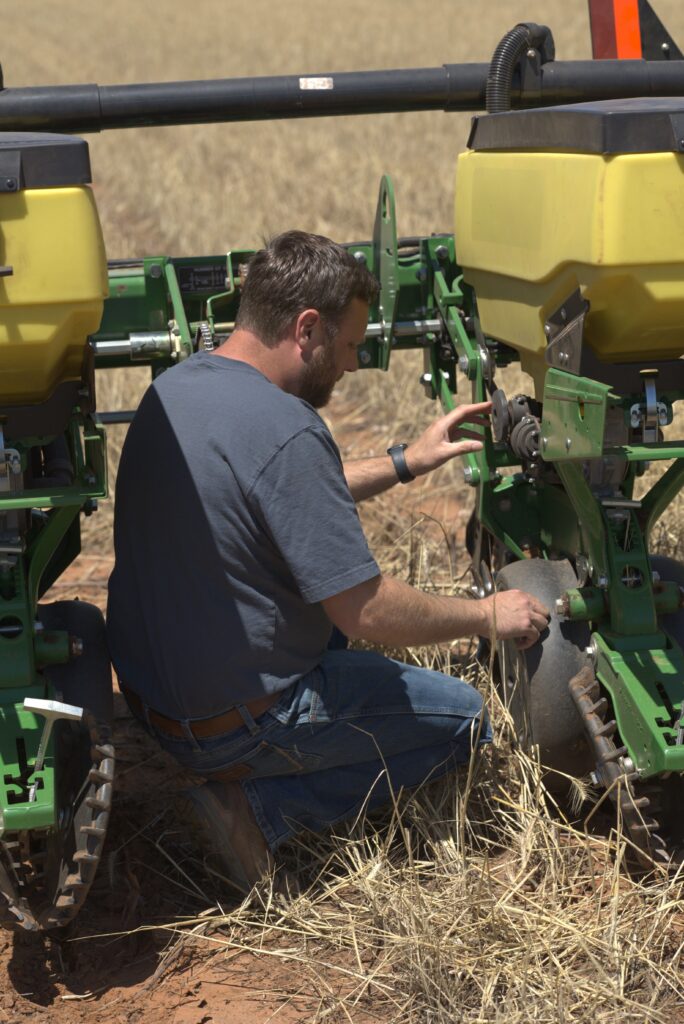
Gauge wheels are responsible for maintaining consistent planting depth.
They should sit tight and flush against the opener discs. If there’s a gap, your depth control will be off.
What to Look For
- Gaps between the wheel and disc
- Worn washers
- Bent wheel arms
- Incorrect bearing tension
Why It Matters
Improper gauge wheel setup leads to:
- Uneven planting depth
- Inconsistent emergence
- Reduced stand quality
4AG’s planter gauge wheels are built for these conditions:
- Durable against rocks and residue
- No lip wear over time
- Fits most planter setups
- Quick, straightforward installation
They’re designed to keep your planting depth consistent across changing field conditions.
https://4agmfg.com/planter-gauge-wheels/
6. Final System Check Before the Field
After checking the major components, run a full system check.
This step helps catch anything that might have been missed.
Final Checklist
- Row alignment across the planter
- Fertilizer system calibration
- Insecticide boxes functioning properly
- Chains and sprockets in good condition
- Tires properly inflated and in good shape
Run the planter briefly to confirm everything operates smoothly.
How to Test Your Planter Before Planting
Testing your planter before the season starts is one of the most valuable steps you can take.
It gives you a chance to catch problems before they cost you time in the field.
What to Check During a Test Run
- Consistent seed spacing
- Uniform planting depth
- Proper trench closure
- Smooth operation of moving parts
Even a short test run can reveal issues that aren’t obvious during inspection.
How Field Conditions Affect Planter Performance
No two fields—or seasons—are exactly the same.
Soil moisture, residue levels, and compaction all affect how your planter performs.
Factors That Impact Performance
- Soil moisture levels
- Residue from previous crops
- Soil type and compaction
- Temperature
These factors influence:
- Depth control
- Seed-to-soil contact
- Closing performance
Adjusting your planter to match field conditions is just as important as maintenance.
Common Planter Maintenance Mistakes to Avoid
Even experienced operators can overlook things.
Some of the most common mistakes include:
- Skipping inspections to save time
- Reusing worn parts for another season
- Ignoring small alignment issues
- Not testing equipment before planting
Most planting problems don’t come from major failures—they come from small details that were missed.
How Planter Maintenance Impacts Yield
Planter performance directly impacts yield potential.
When everything is working correctly, you get:
- Uniform emergence
- Consistent spacing
- Strong early plant growth
- Better yield potential
When it’s not, those problems don’t go away—they multiply throughout the season.
Why Gauge Wheels and Closing Wheels Matter Most
Two components have the biggest impact on planting consistency:
- Gauge wheels
- Closing wheels
Gauge wheels control depth. Closing wheels ensure proper seed-to-soil contact.
4AG’s closing wheels are built for consistent results:
- 24 tillers per wheel for improved soil engagement
- Durable construction for tough field conditions
- Reliable trench closure across rows
https://4agmfg.com/planter-closing-wheel/
When both systems are working together, you get more uniform emergence across your entire field.
Common Signs Your Planter Needs Adjustment
Watch for these signs:
- Uneven emergence
- Seeds sitting on the surface
- Poor trench closure
- Inconsistent spacing
- Weak early growth
These are all indicators that something in your planter setup needs attention.
What Successful Farmers Do Before Planting Season
Farmers who consistently get strong stands don’t skip preparation.
They:
- Follow a planter maintenance checklist every year
- Replace worn parts before they fail
- Test equipment ahead of time
- Pay attention to detail
They understand that planting is one of the most important passes they’ll make all season.

Bringing It All Together
Planter maintenance isn’t complicated—but it requires consistency.
When you take the time to inspect, adjust, and replace worn components, you give your crop a better chance from the start.
And when your equipment is built for real-world conditions, you spend less time fixing problems and more time getting work done.
That’s what 4AG Manufacturing focuses on—durable, farmer-built equipment that holds up when it matters most.
Ready to Get Your Planter Field-Ready?
If you’re preparing for planting season, make sure your setup is ready to perform.
Dealer Locator: https://4agmfg.com/4ag-dealers/
Become a Dealer: https://4agmfg.com/4ag-dealers/
Talk to someone who understands the equipment—and the field.