Getting a crop off to a strong start in no till planting comes down to one thing most folks don’t see once the row is closed: seed depth. And if you’ve been around a planter long enough, you know planter gauge wheels are what control that depth from the first acre to the last.
When seed depth is right, emergence is even, roots establish faster, and yield potential stays intact. When it’s off — even a little — you start fighting uneven stands, delayed growth, and lost efficiency; you can’t always make up later.
This isn’t theory. It’s what happens in the field every season.
What Seed Depth Really Does in No Till Planting
No till planting changes the game compared to conventional tillage. You’re working through residue, moisture varies more, and soil structure is less forgiving. That means seed placement has to be consistent.
Here’s why it matters:
- Uniform emergence: Seeds planted at the same depth come up together
- Moisture access: Too shallow dries out, too deep delays emergence
- Root development: Consistent depth leads to stronger early roots
- Stand consistency: Even spacing + even depth = predictable growth
In no till planting, you don’t get a second chance to fix depth once the seed is in the ground.
How Planter Gauge Wheels Control Seed Depth
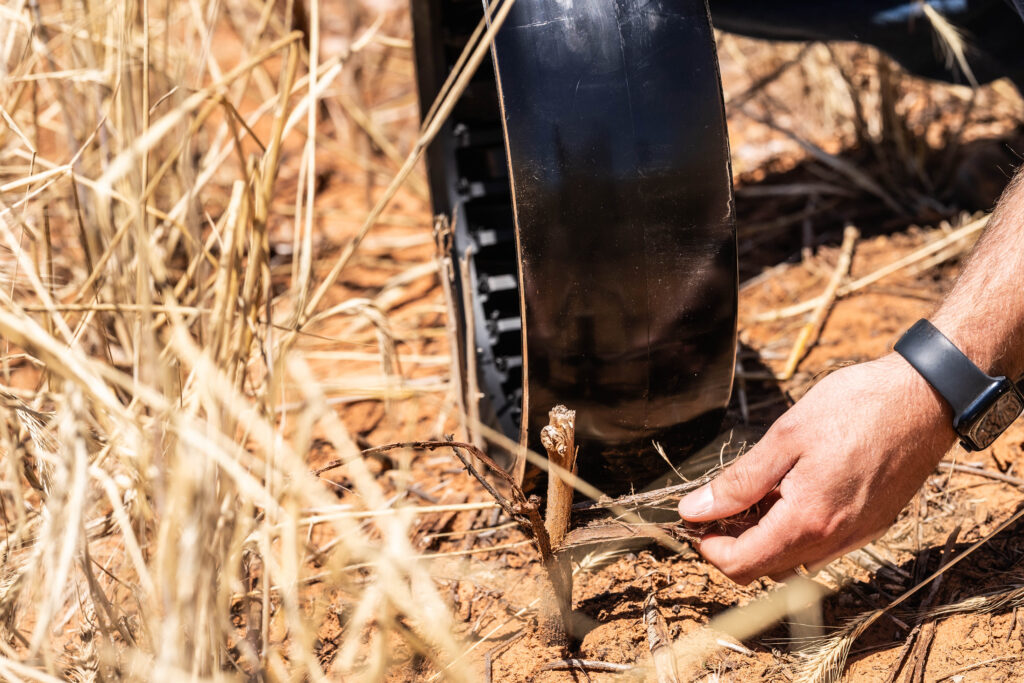
Your planter gauge wheels are the components that physically set and maintain planting depth row by row. They run alongside the opener disks and determine how deep those disks cut into the soil.
When they’re working correctly, your planter holds steady depth across changing conditions, follows the ground contour without bouncing, and maintains consistent contact with the soil surface.
When they’re not, depth starts to fluctuate, seeds end up uneven, and you lose control of the most important part of the planting pass.
That’s why planter gauge wheels aren’t just another wear part — they’re a control point for your entire planting pass.
Why Consistency Is Harder in No Till Conditions
No till planting brings real advantages — moisture retention, soil health, reduced erosion — but it also adds variability.
You’re dealing with crop residue, firmer soil surfaces, changing moisture levels, and uneven terrain — all of which make consistent depth harder to maintain.
All of that puts more pressure on your gauge wheels to stay in firm, consistent contact with the ground. If they can’t handle those conditions, depth control starts slipping fast.
Common Problems Caused by Poor Gauge Wheels
When gauge wheels wear down or aren’t built for no till conditions, the issues show up quickly.
Inconsistent Seed Depth
Worn or poorly fitted gauge wheels allow the row unit to ride unevenly.
Result:
- Seeds too shallow in some spots
- Too deep in others
Poor Soil Contact
If gauge wheels lose contact with the soil surface, depth becomes guesswork.
Result:
- Uneven emergence
- Patchy stands
Increased Bounce
Rough fields and residue amplify vibration.
Result:
- Skipping
- Inconsistent planting depth row to row
Faster Wear in Tough Conditions
Sharp stubble, rocks, and debris wear down weak materials quickly.
Result:
- Frequent replacement
- More downtime
This is where the quality of your farming implements starts to show. When your farming implements are built right, you see it in every row.
What to Look for in High-Performance Planter Gauge Wheels
Not all gauge wheels are built the same. And in no till planting, the difference matters — especially when they’re one of the most important farming implements on your planter.
Here’s what separates dependable gauge wheels from the ones that cost you time and yield:
Durable Construction
You need a wheel that can handle sharp residue, rocks, and long hours in the field without breaking down. A tougher composition means less wear and longer life.
Tight Fit Against the Opener
Gauge wheels should run tight against the opener disks to prevent gaps. This helps prevent soil buildup and keeps depth consistent across the field.
No Lip Wear Over Time
Cheaper wheels develop a lip as they wear. That lip changes how the wheel rides and throws off depth control over time.
UV and Weather Resistance
Equipment sits outside. Materials matter. Good gauge wheels won’t crack or degrade when exposed to sunlight and weather.
Easy Installation
Time matters, especially during planting season. Look for a plug-and-play fit that works with both older and newer planters. 4AG’s planter gauge wheels were built with these exact challenges in mind — designed by farmers who’ve dealt with them firsthand.
How Better Gauge Wheels Improve Your Planting Results
Upgrading your planter gauge wheels isn’t about adding complexity — it’s about improving one of the most critical farming implements on your planter and removing problems at the same time.
Here’s what you gain:
- More Uniform Emergence
When every seed is placed at the same depth, crops emerge together, competition is reduced, and yield potential remains more consistent.
- Better Use of Soil Moisture
Proper depth ensures seeds reach moisture zones without being buried too deeply.
- Reduced Downtime
Durable gauge wheels last longer and require fewer replacements.
- Smoother Operation
Less bounce and better ground contact mean more consistent rows and less operator frustration.
In short: less guesswork, more control.
The Role of Gauge Wheels in the Bigger System
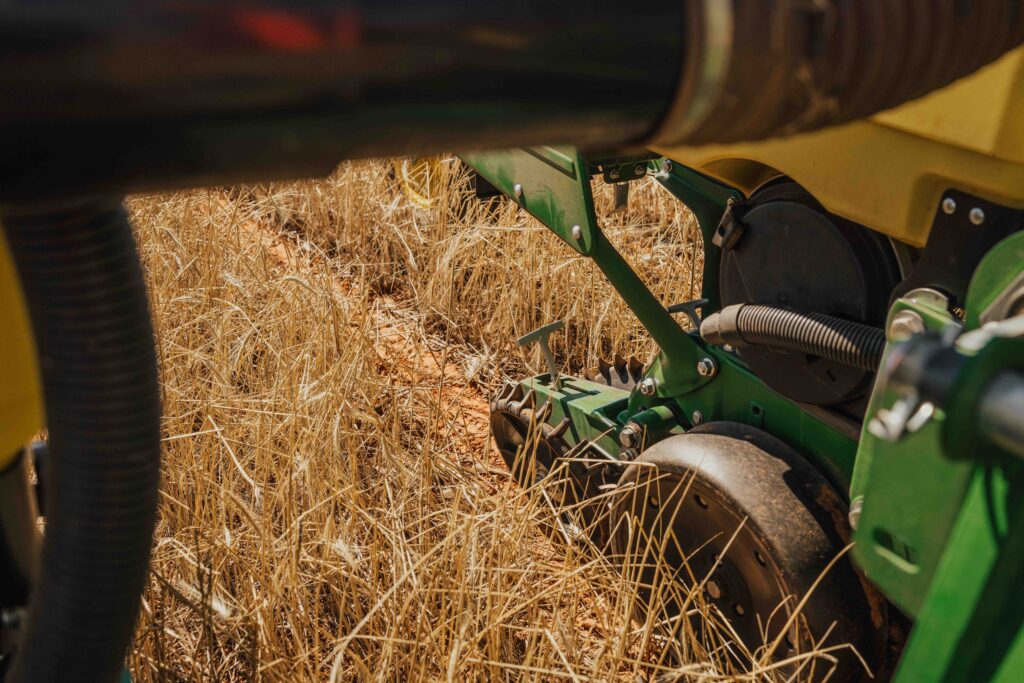
Planter gauge wheels don’t work alone. They’re part of a larger system that includes opener disks, closing wheels, and row unit downforce.
But they’re the first step in that system.
If depth isn’t right at the start, closing wheels can’t fix it, seed spacing won’t matter, and yield potential is already compromised.
That’s why getting gauge wheels right is foundational.
How to Know When It’s Time to Replace Gauge Wheels
A lot of farmers run gauge wheels longer than they should. It’s easy to overlook until performance drops.
Watch for these signs:
- Visible wear or lip formation
- Gaps between the wheel and the opener disk
- Uneven emergence across rows
- Increased vibration or bounce
- Cracking or material breakdown
If you’re seeing any of these, your planter gauge wheels are no longer doing their job.
Why No Till Farmers Can’t Afford Inconsistency
In conventional systems, you can sometimes “fix” problems with additional passes.
In no till planting, you don’t have that luxury. You’re relying on a single pass, one placement, and one opportunity to get it right.
That’s why consistency matters more here than anywhere else. And consistency starts with the components that control depth.
How Seed Depth Impacts Yield Potential in No Till Farming
Seed depth doesn’t just affect emergence — it directly impacts yield potential from the start.
When seeds are placed at inconsistent depths, plants don’t emerge uniformly. That creates competition within the same row. Some plants get ahead. Others fall behind.
That gap shows up later in uneven ear or pod development, reduced nutrient uptake, and lower overall yield per acre.
In no till planting, where soil structure and residue already create variability, consistent depth is one of the few things you can fully control.
And that control comes back to your planter gauge wheels doing their job every pass.
The Connection Between Gauge Wheels and Soil Conditions
Not all fields plant the same — even within a single operation.
You might run into heavy residue in one field, sandy soil in another, and clay that holds moisture differently.
Your gauge wheels have to adapt to all of it without losing contact or consistency. That’s why material and design matter.
Problems show up when residue builds up between the wheel and opener, soil firms up and limits penetration, or ground conditions vary across rows.
Stronger, better-fitting planter gauge wheels help eliminate those variables so your planting depth stays consistent regardless of conditions.
Why Cheap Gauge Wheels Cost More Over Time
It’s easy to look at gauge wheels as a simple replacement part. But cutting corners here usually shows up somewhere else.
Lower-quality gauge wheels tend to:
- Wear faster in tough no till conditions
- Develop lips that affect depth accuracy
- Lose proper alignment with opener disks
That leads to more frequent replacements, more time spent adjusting equipment, and less consistent planting results. Over time, the cost isn’t just in parts — it’s in lost efficiency and performance.
Investing in durable planter gauge wheels means:
- Fewer changeouts during the season
- More reliable depth control
- Better long-term value
How to Set Your Planter for Consistent Depth
Even the best gauge wheels need proper setup to perform.
Before heading to the field, it’s worth checking a few key areas:
Check Gauge Wheel Contact
Make sure the gauge wheels are running tight against the opener disks. If there’s a gap, soil can accumulate and affect the depth.
Verify Depth Settings
Set your planter based on crop and soil conditions — not just last year’s settings. Conditions change. Your setup should too.
Inspect for Wear
Look for flat spots, cracks, or lip formation — all of which affect how the wheel rides. Any of these can affect how the wheel rides.
Test Before Full Operation
Plant a short pass and dig behind the planter. Check actual seed depth — not just what the settings say. A few minutes here can save a season of frustration.
Built for the Way You Actually Farm
At 4AG Manufacturing, everything is built with one mindset: keep it simple, make it last, and make it work in real conditions — not just on paper. Every piece of equipment is designed as dependable farming implements that hold up in the field.
Their planter gauge wheels are:
- Built to handle tough no till environments
- Designed for long-term durability
- Made for quick installation
- Backed by a 3-year warranty
It’s not about adding features. It’s about solving problems farmers deal with every day.
Because at the end of the day, you’re not looking for something flashy — you’re looking for something that works.
Final Thoughts: Depth Isn’t a Small Detail
Seed depth might seem like a small part of planting, but it drives everything that comes after.
Emergence, stand uniformity, root development, and yield potential all start with consistent seed depth. And planter gauge wheels are what make that consistency possible.
If they’re worn out, poorly built, or not suited for no till planting, you’re giving up control where it matters most. And when key farming implements fall short, the results show up fast.
Ready to Take Control of Your Planting Depth?
If you’re seeing uneven emergence or fighting inconsistent stands, it might not be your planter — it might be what’s controlling it.
Take a closer look at your planter gauge wheels. If they’re not holding up, it’s time for something built to handle real field conditions.
Learn more about 4AG Manufacturing and the equipment built for farmers, by farmers:
If you’ve got questions or want help choosing the right setup, reach out. You’ll talk to someone who understands what you’re dealing with — because they’ve been there too.